
Walk-In ECG (Electrocardiogram)
ECG is a non-invasive procedure that records the electrical activity of the heart at rest. During an ECG, electrodes placed on the skin measure heartbeat regularity. The information gathered by an ECG procedure can be used to assess heart rate, rhythm, blood pressure (hypertension), and symptoms such as palpitations or chest pain (angina).
Insight Medical Imaging offers walk-in ECG exams at most of our Edmonton, Leduc, Spruce Grove, and Sherwood Park locations. All ECG services are first-come, first-serve, and cannot be booked in advance. If you are unable to take time off work during the day for your ECG, we recommend visiting a clinic that has extended hours in the evenings or over the weekend for your electrocardiogram exam.
Please bring the following with you when you come in for your ECG exams:
- The requisition from your doctor
- An Alberta Health Care card
- Photo identification
You can submit your requisition form in advance using our online form here.
Why Am I Being Referred to Get an ECG?
By performing an ECG exam, or electrocardiogram, your doctor will be able to identify an unusual heart rate by measuring the electrical activity of the heart.
An ECG records how fast or slow your heart is beating, the steady or irregular rhythm of your heartbeats, and the strength & timing of the electrical impulses as it moves through different sections of the heart. Additionally, the amount of electrical activity passing through the heart during an ECG exam can indicate whether parts of the heart are too large or are overworked and help diagnose heart-related conditions.
In particular, an electrocardiogram exam will allow your doctor to:
- Analyze your heart rhythm
- Diagnose potential problems, such as a heart attack
- Ascertain if you have poor blood flow to your heart
- Discover any abnormalities
- Detect any deficiencies or surplus of electrolytes such as potassium or calcium
As ECGs are simple and painless, it is generally the first test done to determine whether an individual has a heart-related condition. You may be referred to get an ECG if:
- You are experiencing chest pains or palpitations
- You are scheduled or are preparing for surgery
- You have had past heart problems
- Your family has a strong history of heart-related conditions
How to Prepare For an ECG Heart Examination
Like with all our examinations, all of our exam preparation steps can be found by clicking the “Exam Prep” button at the top right-hand corner of our website.
As ECGs are fairly simple and painless, there is no special preparation required for our walk-in services. However, if you suspect that you may be developing a heart condition, then we recommend for the best results that you:
- Ask your doctor if you need to have a meal plan before the test — some patients may be encouraged to have a light breakfast before their ECG heart tests
- Refrain from smoking for at least 4 hours before your test
- Come to your appointment in light, comfortable clothing. You may be asked to remove any jewelry before our technologist(s) start the examination
- Inform your doctor and our staff of all the medication and natural health products you are currently taking as some products may influence the results of the test
ECG vs. EKG vs. Electrocardiogram Tests
Researching ECG imaging can be confusing and frustrating, as multiple abbreviations are used interchangeably with no explanation. While ECG spelling variations may imply various unique exams, all three terms are synonymous and refer to the same cardiac assessment.
The difference in electrocardiogram abbreviations stems from language translations between German and English. The German language spells electrocardiogram as elektro-kariographie, hence the acronym EKG rather than ECG.
Electrocardiogram vs. Echocardiogram
Insight Medical Imaging offers multiple types of scans to examine the heart, including electrocardiogram (ECG) and echocardiograms. ECG and echocardiograms are often confused because they have similar spelling and are often used in conjunction as they are complementary for cardiac assessments. However, each exam provides your doctor and our cardiologists and radiologists with different information, so it is important to understand the differences between ECG and echocardiograms.
ECG exams, or electrocardiogram, record the electrical activity of your heart at rest using a heartbeat monitor. The ECG monitor records the rhythm of the heartbeat, and our internal medicine specialist analyzes the pattern for inconsistencies.
Echocardiograms provide images of internal structures and how the blood flows through the heart. This exam is done by ultrasound, which uses high-frequency sound waves to investigate the communication and function of your heart’s anatomy, such as valves, vesicles, and atriums.
What Happens During my Exam?
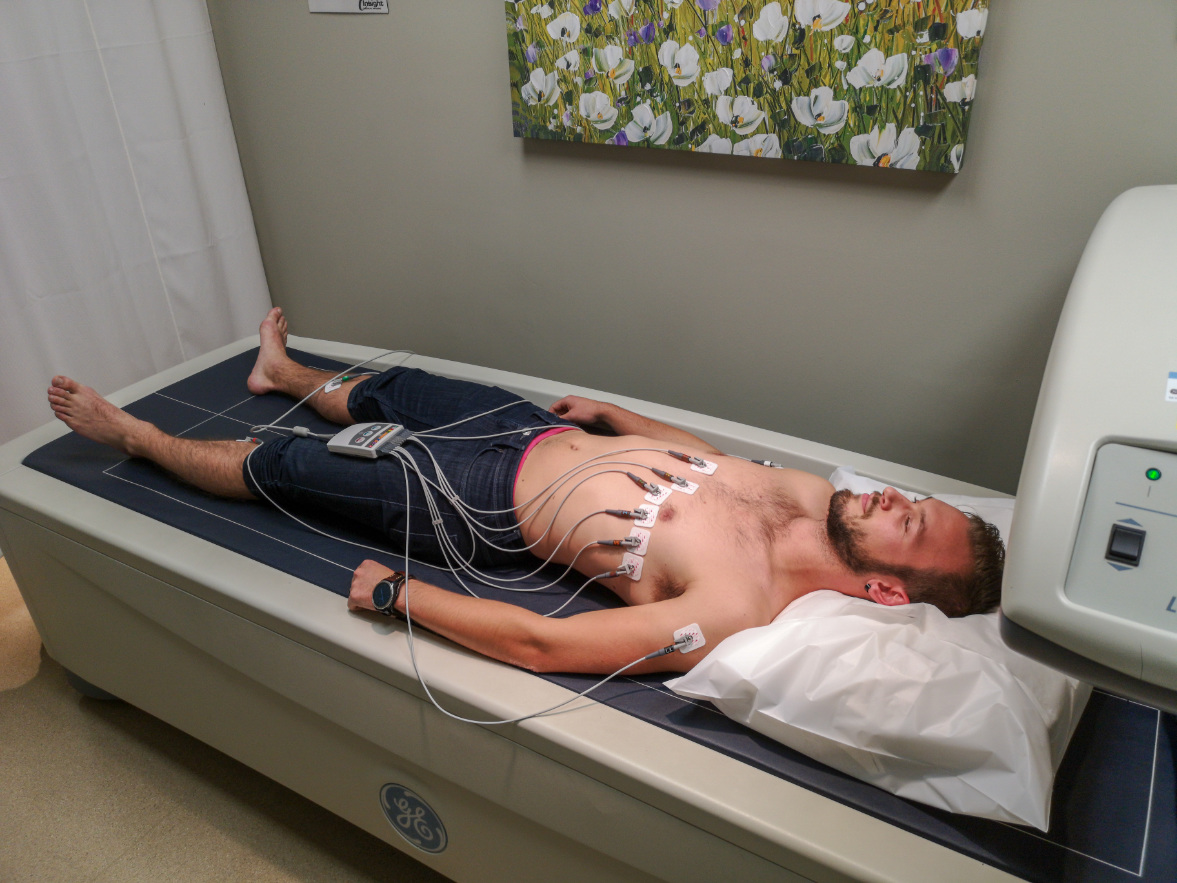
- After you’ve checked in for your ECG exam, a technologist will give you a gown to change into
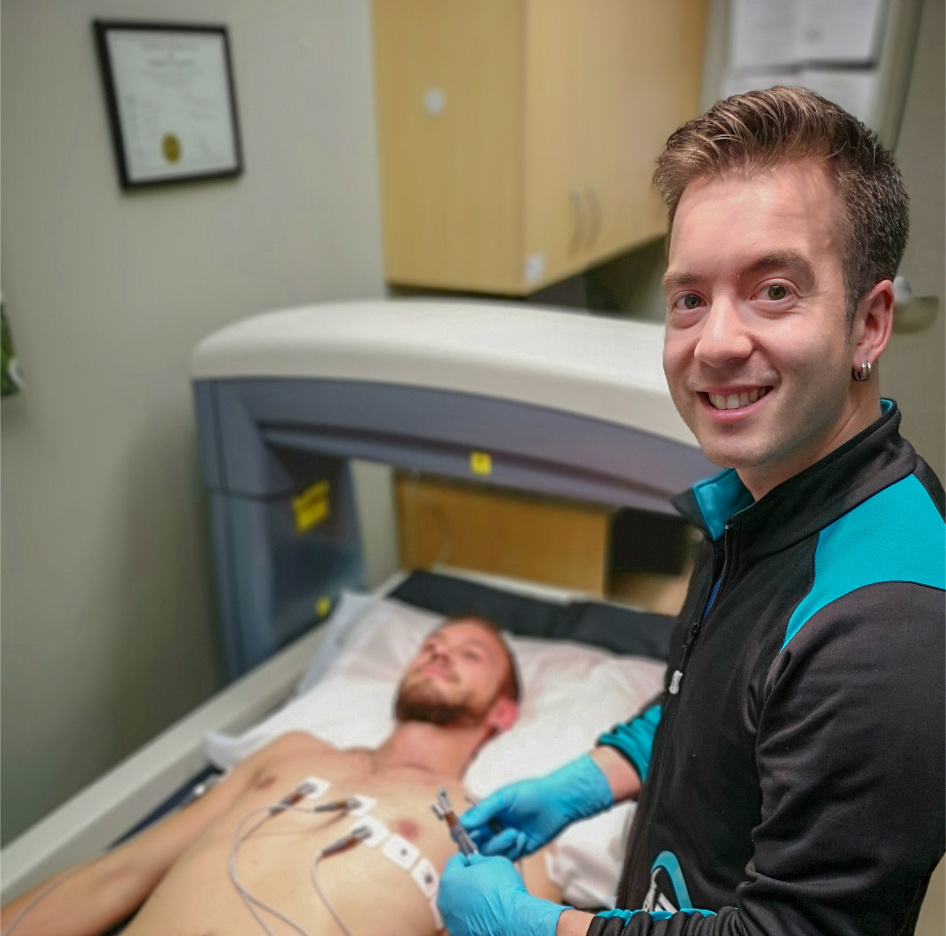
- Our electrocardiogram technologist will help position you on a bed, where you will lie flat on your back
- You will have six leads placed on your chest, plus one on each arm and leg. We attach the leads as discretely as possible for your comfort
- Occasionally, men will opt to take their shirt off instead of changing into a gown for their ECG exam, based on their comfort level
- The test will take approximately 15 minutes to complete, however, the exam length can vary based on each patient
- One of our internal medicine specialists will review the ECG results and send a detailed report to your doctor. We try our best to send the results as soon as possible, usually within one business day
Are there any risks?
ECG, or electrocardiogram, exams are safe and there are no pain or risks associated with the ECG procedure. When the ECG electrodes are removed there may be some slight discomfort. Furthermore, the actual ECG exam is completely safe and does not send any electricity into the body but merely records the heart’s existing electrical signals.
Important Notes
- Please save your questions until the end, as talking during an ECG procedure can change your heart rate and impact your exam results
- Sometimes we may need to shave or clean the patient’s chest so the electrodes can be attached properly
- If you have an Alberta Health Care card or valid healthcare card from out of province, there is no cost for a walk-in ECG procedure (except Quebec)
ECG Services are Available
at The Locations:
- 15309 Castle Downs Rd NW Edmonton, AB T5X 6C3
- 780-457-4070
- Monday - Friday: 7:30 AM - 4:00 PM Extended Hours: Monday - Friday: 4:00 PM - 8:00 PM Saturday: 9:00 AM - 5:00 PM
- 2049 111 ST NW Edmonton, AB T6J 4V9
- 780-438-0547
- Monday - Friday: 7:30 AM - 4:00 PM Extended Hours: Monday - Friday: 4:00 PM - 8:00 PM Saturday: 9:00 AM - 5:00 PM
- 12779 50 ST NW Edmonton, AB T5A 4L8
- 780-475-1866
- Monday - Friday: 7:30 AM – 4:00 PM Extended Hours: Monday - Friday: 4:00 PM - 8:00 PM Saturday: 9:00 AM - 5:00 PM
- 5307 50 AVE Leduc, AB T9E 6T2
- 780-486-8104
- Monday - Friday: 7:30 AM - 4:00 PM
- 200 Meadowlark Shopping CTR NW Edmonton, AB T5R 5W9
- 780-489-8430
- Monday - Friday: 7:30 AM - 4:00 PM
- 6466 28 AVE NW Edmonton, AB T6L 6N3
- 780-486-8103
- Monday - Friday: 7:30 AM - 4:00 PM Extended Hours: Monday - Friday: 4:00 PM - 8:00 PM Saturday: 9:00 AM - 5:00 PM
- 136 Athabascan AVE Sherwood Park, AB T8A 4E3
- 780-464-1515
- Monday - Friday: 7:30 AM - 4:00 PM Extended Hours: Monday - Friday: 4:00 PM - 8:00 PM Saturday: 9:00 AM - 5:00 PM
- 107-505 Queen ST Spruce Grove, AB T7X 2V2
- 780-962-0297
- Monday - Friday: 7:30 AM - 4:00 PM Extended Hours: Monday: 4:00 PM - 8:00 PM Wednesday: 4:00 PM - 8:00 PM Thursday: 4:00 PM - 8:00 PM
- B1-9509 156 ST NW Edmonton, AB T5P 4J5
- 780-483-3422
- Monday - Friday: 7:30 AM - 4:00 PM
FAQ
ECG Exam Preparation
Planning an ECG appointment? Learn more about ECG exam preparation and find the clinic most convenient for you.